Introduction
There are several Australian standards applicable to cranes. They are AS 1418, AS 2550, AS 522X and AS 52XX series, and also ISO 16625.
They determine and guide your crane's structural, capacity, mechanical, electrical-control, functional, operational and maintenance, service life and also WHS/OHS legislative compliance requirements cascade down from Australia-wide WHS/OHS acts, regulations and code of practices/compliance codes.
This article attempts to clarify and share what you need to know.
Role of AS 1418 and AS 2550
AS 1418 standard series deals with design, construction, installation/erection, commission and dismantle of cranes. It specifies structural, mechanical, electrical and safe control requirements. AS 2550 standard series deals with safe use/operation, maintenance and inspection and even disposal requirements. They are complementary to each other, not competing and cover whole asset lifecycle.
Both standard series are based on safety, risk and integrity management principles.
Both series are frequently required by Australia-wide jurisdictions for safe design and safe use registrations. Hence, according to WHS/OHS legislations, all PCBUs (person conducting a business or undertaking) involved in manufacture, import, supply, own, use/operate and maintain; must comply with these standards.
AS 1418 and AS 2550 frameworks
AS 1418 is a standard series which comprises a combination of multiple parts, not a single standard. The 2021 edition of this series realigned with international standards such as ISO, IEC and EN. These parts complement each other. The most commonly referred standards in crane industry are:
AS 1418.1 - Cranes, hoists and winches – General requirements: This is the foundation of the series. It deals with specific principles required for design, manufacture, test and commission of cranes in general, including the provision of instructions for safe use and maintenance. The latest edition was updated in 2021 and supersedes the 2002 edition.
Now, it refers to AS 52XX series (adopted from ISO) and ISO standards, for normative references and various detailed clauses. AS 2550.1 complements to AS 1418.1 as general requirements of safe use.
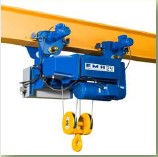
AS 1418.2 – Cranes (including hoists and winches) - Serial hoists and winches: This standard outlines specific principles for serial hoists and winches. The current edition is 1997.
It specifies the requirements for manually operated chain hoists, power-operated hoists, power-operated wire rope hoists, scaffolding hoists, creeper winches, manually operated drum winches, power-operated drum winches and trolleys. It also proposes the application, design, electrical and pneumatic controls, performance testing, marking, certificates, operation and maintenance requirements for such equipment.
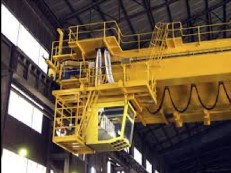
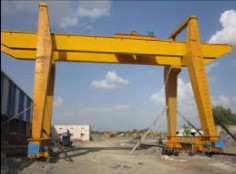
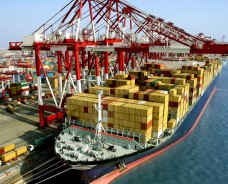
AS 1418.3 – Cranes, hoist & winches – Bridge, gantry, portal (including container cranes) and jib cranes: This standard outlines specific principles for bridge, gantry, semi-gantry and portal cranes. It also covers containers and heavy-duty cranes. The current edition is 2024. AS 2550.3 complements AS 1418.3 as requirements of safe use.
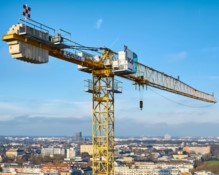
AS 1418.4 - Cranes, hoist & winches – Tower cranes: This standard outlines specific principles for tower cranes that are either permanently erected or designed to be dismantled when they have served their purpose. The current edition is 2004. AS 2550.4 complements to AS 1418.4 as requirements of safe use.
AS 1418.5 – Cranes, hoist & winches – Mobile cranes: This standard outlines specific principles for the design, construction, installation of safety devices, testing and information for use and maintenance of mobile cranes. It was adopted/modified from EN 13000-2010. The current edition is 2013. AS 2550.5 complements AS 1418.5 as requirements of safe use.
AS 1418.10 – Cranes, hoist & winches – Mobile elevating work platforms: This standard outlines specific principles for mobile elevating work platforms (MEWPs), including insulated aerial devices and those designed for use in orchards. It does not apply to passenger and goods lifts, builders' hoists, fixed elevating work platforms, mast climbing platforms or aerial fire appliances. The current edition is 2025. AS 2550.10 complements AS 1418.10 as requirements of safe use.
AS 1418.11 – Cranes, hoist & winches – Vehicle loading cranes: This standard outlines specific principles for the design, examinations and tests of hydraulically powered loaders cranes and their mountings on vehicles or static foundations. It does not apply to loader cranes used on ships or floating structures or to cranes which are designed as total integral parts of special equipment. It was adopted/modified from EN 12999-2011. The current edition is 2014. AS 2550.11 complements AS 1418.11 as requirements of safe use.
AS 1418.13 – Cranes (including hoists and winches) – Building maintenance units: This standard outlines specific principles for building maintenance units and their supporting structures, permanently provided for use and which incorporate power-operated suspension equipment. It does not include requirements for suspended scaffolding. The current edition is 1996. AS 2550.13 complements AS 1418.13 as requirements of safe use.
AS 1418.17 – Cranes (including hoists and winches) - Design and construction of workboxes: This standard outlines specific principles relating to the design and construction of work boxes generally having one working deck level, to accommodate a maximum of three persons. The current edition is from 1996.
AS 1418.18 – Cranes (including hoists and winches) - Runways and monorails: This standard outlines specific principles for crane runway girders and monorails constructed of structural steel. The current edition is 2024.
Other parts
- AS 1418.6 - Cranes, hoist & winches – Guided storing and retrieving appliances
- AS 1418.7 - Cranes (including hoists and winches) – Builders hoists and associated equipment
- AS 1418.8 - Cranes, hoist & winches – Special purpose appliances
- AS 1418.9 - Cranes, hoist & winches – Vehicle hoist
- AS 1418.12 - Cranes (including hoists and winches) – Crane collector systems
- AS 1418.16 - Cranes (including hoists and winches) - Mast climbing work platforms
Withdrawn parts
- AS 1418.14 - Cranes (including hoists and winches) – Requirements for cranes subjected to arduous working conditions
- AS 1418.15 - Cranes (including hoists and winches) – Concrete placing equipment
Vital principles
Principle 1 – Duty class
In AS 1418.1, through other normative standards (AS and ISO), cranes are classified based on their frequency (working cycle) of use and magnitude of loadings (state of loading). Through combination of these two duty factors, a crane is classified as a whole. They are classes from A1 to A8. A1 is being light loading and infrequent use, while A8 denotes to very heavy loading and frequent use.
Why does this vital? Duty class leads strength, wear and fatigue designs of the crane. An under-designed crane will fail quicker than expected and risks safety of people and property due to heavier and more frequent loadings. For example, use of A4 crane at A7 duty. An over-designed crane will expense huge lifecycle cot to the owning/operating PCBUs - opposite of previous example.
Principle 2 – Load combinations
In AS 1418.1, through other normative standards (AS and ISO), cranes designs are supported by load combinations for the predicted operating context. Load combinations are derived from load groups of principle loads, additional loads and special loads. And the combinations are categorised into frequently occurring, infrequently occurring and rarely occurring.
Why does this vital? Loads shall be combined to determine the maximum stresses a crane will experience during operation. This needs to consider its most unfavourable attitude and configuration while the loads are assumed to act in magnitude, point/line of action and direction causing the maximum stresses at a critical point selected for evaluation on the basis of engineering consideration. Hence, designing for most practical load combinations leads to satisfy expected design life. Otherwise, designer must ensure working limits are established and documented for safe use.
Principle 3 – Fatigue and welded joints
Cyclic loadings over time accumulate and eventually crack welded joints where high stress concentration occurs. To overcome such fatigue failures, welded joints must be done with high quality outcomes and undergo rigorous non-destructive testing. Examples are; web-to-top flange welds, beam-to-leg connections, girder-to-end carriage connections, leg-to-base joints, drum mountings, trolley rail welds, hook flanges, wheel flanges & bogie pivots, etc. These welded joints must comply with higher strength levels and are derived from duty classes and load combinations. AS 1418.1 makes normative reference to AS/NZS 1554 series for structural steel welding.
How JUFANDO support crane industry PCBUs?
You may be a PCBU with accountability of design & manufacture, import, supply, install/erect, operate, maintain, dismantle and dispose. JUFANDO provides consultancy services in particular stages of cranes' asset lifecycle.
They include:
- Engineering design verification and sign-off by a chartered (CPEng) and registered engineer (RPEV)
- Capacity evaluation in over rated loading and off-vertical (side) hoisting
- DWP calculation, load ratings and residual useful life (RUL) assessment
- Crane upgrade, reverse engineering and modernisation designs/advise
- Customised lift attachment/beams/frames designs
- Crane design registration support, documentation and sign-off
- Support to develop a crane manufacture-test-commission project management system with MDR, ITP, FAT, SAT and other documentation
- Hazard identification and risk assessments
- Failure investigation, analysis and defect elimination recommendations
- Develop world-class maintenance strategies/tactics for crane maintenance and condition monitoring by an internationally certified asset management assessor (CAMA)
- Develop comprehensive lubrication regimes for cranes based on practical operating context and tribology principles by a machine lubrication professional
To learn more about our approach, visit our "Custom Machine Design" page and you can always reach us for obligation free discussions.